

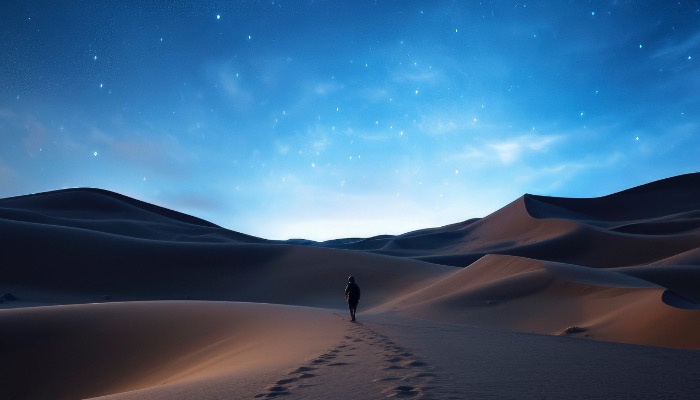
Sand grains or the stars? What’s more in count? “I will love you more than there are stars in the universe and grains of sand on all the beaches of Earth.” It sounds like a line from a romantic film—but believe it or not, the numbers behind this poetic promise check out. For decades, astronomers have been captivated by the vastness of the cosmos and Earth’s sandy shores. Surprisingly, when you compare the two, stars take the cosmic crown. Thanks to sky surveys conducted by instruments like the Hubble Space Telescope and the James Webb Space Telescope, scientists estimate there are about two trillion galaxies in the observable universe.
What’s More – Stars or Sand Grains
Each galaxy can contain billions or even trillions of stars. The total number? Roughly a septillion stars (that’s 1 followed by 24 zeros). Meanwhile, Earth’s beaches are estimated to hold around 7.5 quintillion grains of sand. That’s a staggering figure in itself—but it still falls far short. For every grain of sand on Earth, there are approximately 10,000 stars in the universe. If each star were the size of a grain of sand, we would need thousands of Earths just to fit them all.
It’s important to note that these numbers only account for what we can observe. The actual universe may be much larger, with countless galaxies and stars still undetected. So the next time someone says they love you more than all the stars or grains of sand—take a moment. Not only are they using a scientifically backed metaphor, but they are also comparing their love to quantities beyond imagination. Just maybe don’t ask them to count to a septillion.