

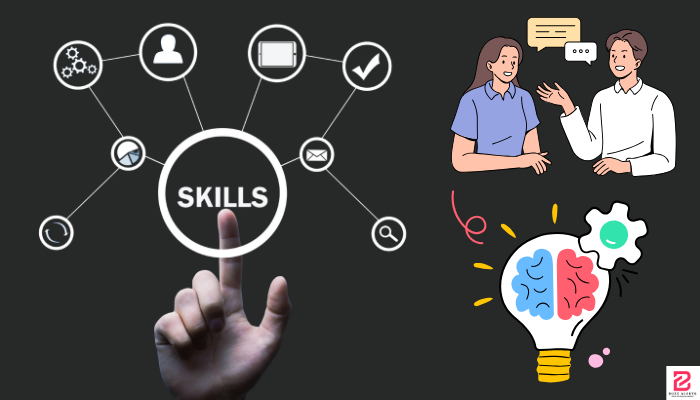
I have been a student for much longer than I have been in a training period. Even during my student years, I often found myself combining two or more skills to learn better, express myself more clearly, or navigate challenges. Now, in my role as an IELTS trainer, I find myself wearing many hats. Over the years, I have also worked as a journalist, where I had to be detail-oriented, analytical, observant, and a sharp listener—all at once.
Skill-Stacking
What’s interesting is that skill-stacking isn’t limited to adults or professionals. I see it every day in my four-year-old niece. Whether she is explaining—very elaborately—how to apply nail polish, choosing the perfect bracelet to match her dress, or navigating the iPad like a pro, she’s constantly observing, listening, processing, and passing on information. That’s what makes this concept so powerful: combining abilities isn’t just about studying or working—it’s something we all do, often without even realising it.
Just like my niece, I realised early on that doing anything well often means bringing multiple skills together. My career has been shaped by this idea. I have moved between roles—as a student, trainer, journalist, social media manager, and team leader—and each one demanded its unique mix of abilities. As a journalist, I had to stay observant, think analytically, and communicate clearly—all at the same time. When I stepped into the classroom as a teacher, empathy became just as important as clarity and time management. Later, while designing workshops and managing social media, I leaned into writing, visual design, and the ability to understand what my audience truly needed. At the time, I didn’t think of it as “skill-stacking”—I just did what needed to be done. But looking back now, I see how combining these skills gave me the flexibility to move across fields, explore new opportunities, and bring more value to every role I took on.
Today, students can no longer afford to be one-dimensional. The job market is evolving rapidly. AI is changing industries. New roles are emerging while others disappear. Change is constant, and the best way to keep up is by learning skills that travel well. Whether it’s communication, critical thinking, digital literacy, or creativity, transferable skills will always matter. These days, employers aren’t just interested in degrees—they’re looking for people who take initiative, adapt easily, and know how to solve problems in real time. They want quick learners who can juggle different tasks and grow along with the role. That’s where skill-stacking gives students an edge—it makes them flexible, confident, and future-ready.
Importance
The good news is that it does not require a formal course. It starts with awareness of what you’re already doing and how your skills can work together. I often ask my students simple questions: “How did you plan this task?” or “Which part was hardest and why?” These small moments of reflection help them recognise the layers behind what they do.
I also encourage them to mix types of thinking—maybe a listening activity followed by note-making, or a creative blog post based on an IELTS topic. The results are almost always more thoughtful and personal.
These everyday actions build a skill stack quietly—but powerfully. Because in the end, it’s never just one skill. It’s the combination of skills—sometimes unexpected, sometimes hard-earned—that helps students not just survive, but thrive in a world that’s always changing.