

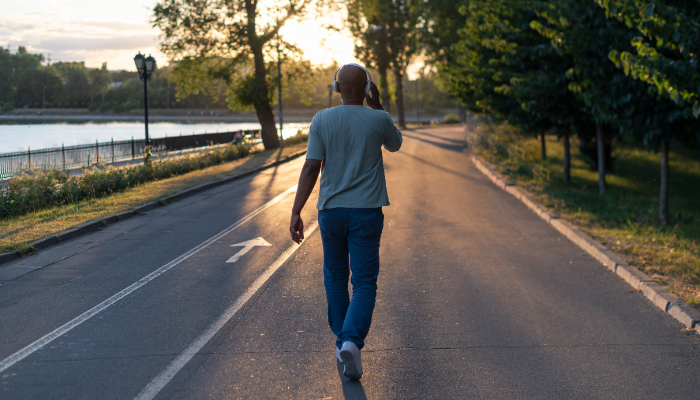
Walking Backwards, also known as retro walking, is an effective yet underrated movement technique that engages the body and brain in a completely new way. Unlike forward walking, this method challenges habitual gait patterns, making the brain work harder to stay balanced and coordinated.
As a result, it activates the prefrontal cortex, the region responsible for attention, decision-making, problem-solving, and memory. This unique neurological demand is what makes backward walking especially powerful for boosting cognitive flexibility.
How Does Walking Backwards Strengthen the Body?
Retro walking shifts the physical workload from the ankles to the hips, knees, and core, engaging underused muscles such as the quadriceps, calves, glutes, and hip flexors.
Orthopaedic specialist Nicole Haas explains that this change in direction alters mechanical load and recruits muscles, tendons, and joints differently, creating a fresh physical challenge.
Research by kinesiology expert Janet Dufek shows that backward walking improves hamstring and lower-back flexibility, reduces back pain, and enhances balance and stability. It also burns 40% more calories per minute than brisk forward walking and places less stress on knee and hip joints, making it an effective and joint-friendly training option.
How Does It Boost Memory and Cognitive Flexibility?
The cognitive impact of retro walking is one of its most intriguing benefits. Studies show increased activity in the prefrontal cortex during backward movement, which supports memory recall and flexible thinking.
Even imagining yourself walking backwards without moving has been linked to improved memory test scores. Researchers believe this is because the brain must work harder to coordinate unfamiliar movement, stimulating neuroplasticity and enhancing executive function.
How to Practise Safely
Start Slow: Begin with 10 to 15 minutes per day in a clear, safe space or on a treadmill.
Use Support: Practise near a wall or with a partner until comfortable.
Alternate Directions: Combine backward and forward walking to challenge coordination.
Monitor Intensity: Increase duration or speed gradually to avoid strain.
Consult Professionals: Seek advice if you have joint issues or balance disorders.
Backward walking is low-cost, accessible, and beneficial for both physical strength and mental sharpness. It improves posture, stability, reaction time, and overall fitness while stimulating cognitive processes that help protect against age-related decline. Adding just a few short sessions weekly can meaningfully enhance both body and brain health.