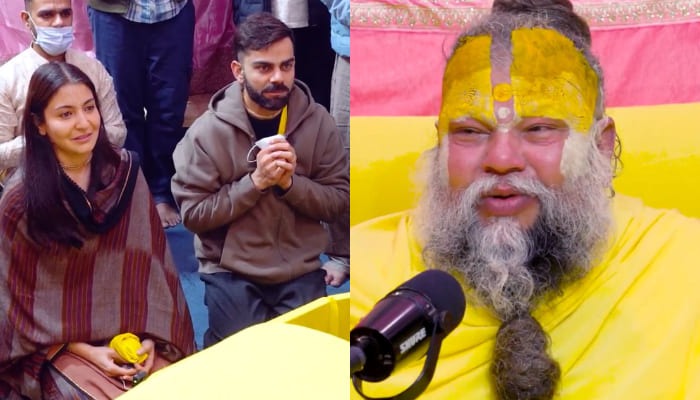

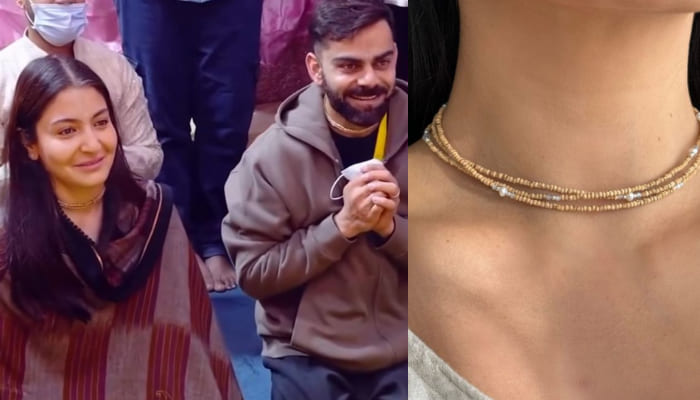
Recently, Anushka Sharma and Virat Kohli visited Premanand Maharaj Ji at his ashram in Vrindavan, just days before Kohli’s reported return to domestic cricket. Seated at Shri Hit Radha Keli Kunj, the couple listened quietly as Premanand Ji spoke about devotion, purpose, and life beyond fame and success. Although this was their third trip to Vrindavan this year, their modest appearance attracted attention. With chandan on their foreheads, modest clothing, and Tulsi kanthi malas around their necks, many were curious about the spiritual meaning behind this sacred necklace.
What Is Tulsi Kanthi Mala?
The Tulsi kanthi mala is a sacred necklace made from the stem or wood of the Tulsi plant, worn close to the neck, usually in two or three rounds. It is mainly associated with devotees of Lord Vishnu and his avatars, including Lord Krishna and Lord Rama. In Hindu belief, Tulsi is considered highly sacred, symbolising purity, devotion, and divine protection. Wearing the mala is believed to bring mental peace, spiritual discipline, and protection from negative influences.
Rituals, Beliefs, and Daily Practices
The Tulsi mala is not worn casually. Traditionally, it is purified with holy water, such as Gangajal, and offered to Lord Vishnu before being worn. Those who wear it are encouraged to follow simple living, clean habits, and regular chanting. Certain restrictions are followed, such as avoiding non-vegetarian food, alcohol, onion, and garlic while wearing the mala. It is also believed, according to Vedic and Ayurvedic traditions, to support mental balance and overall well-being. If the mala breaks, it is replaced respectfully, and women are advised to remove it during menstruation and wear it again after purification.