

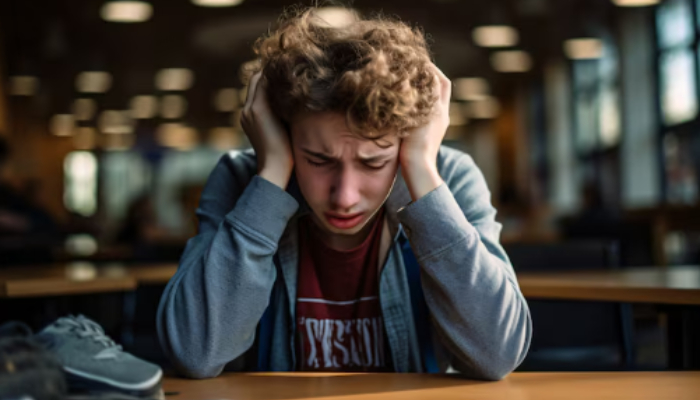
How many silent cries inside our classrooms go unheard before they become headlines?
A Class 11 Madhya Pradesh student pressed a pen between her fingers — was it a final attempt to steady her breaking world?
A Jaipur girl begged adults to stop the bullying — why did her words matter only after she was gone?
A Class 10 Delhi boy was told, “Don’t do drama,” moments before he gave up — what if someone had simply believed him?
Reports get written, policies get reviewed, yet the real fear in a child’s voice often goes unheard in the noise of formalities. These tragedies keep reminding us that mental health support in schools cannot be treated as an extra. It is a basic necessity that demands urgency, not afterthoughts.
Classroom Struggle Becomes Visible
In many classrooms, students show signs of rising emotional stress. These struggles begin quietly in missed assignments, sudden withdrawal, or conflicts with friends. Sometimes they talk back, lose patience quickly, or retreat into silence. When teachers overlook these signs, children start believing their pain is invisible.
Opinion: Schools must train teachers to recognise emotional distress instead of punishing it. Simple changes such as calmer responses, short conversation breaks, and observing behaviour patterns can prevent a stressed child from reaching a breaking point.
Where Schools Fall Short
Schools often react only after a tragedy, not before it. Counselling rooms remain understaffed, mental health sessions are treated as formalities, and serious complaints of bullying are ignored until they escalate. Students who seek help are sometimes told to adjust, grow stronger, or stop complaining, making them feel more isolated.
Opinion: Schools must implement strict anti-bullying cells, maintain confidential complaint systems, and ensure that counsellors are present and approachable. Prevention must replace damage control.
Impact of Home and Digital Overload
Teachers often complain about students becoming disruptive, but they rarely pause to ask what is causing that behaviour. Long hours on screens, stressful home environments, and constant academic pressure mentally exhaust children, and these issues show up in the classroom. Parents also observe changes, but many realise it only when the behaviour becomes impossible to ignore or assume it is just a normal teenage phase.
Opinion: Parents need to monitor screen time, ask children about their day, and pay attention to sudden personality shifts. Joint parent–teacher discussions, not just annual meetings, can help identify problems early.