

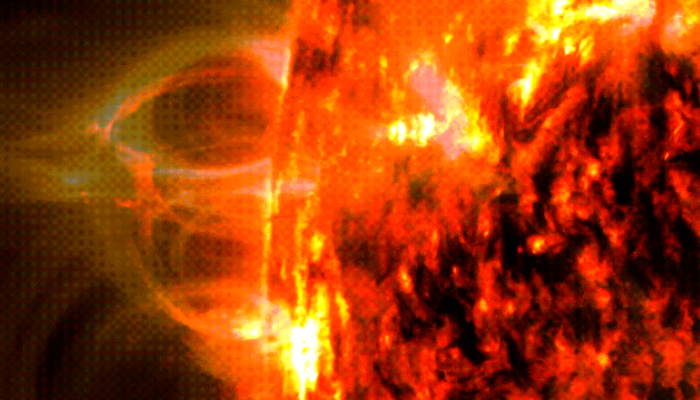
Scientists have discovered why it rains on the Sun. Unlike rain on Earth, solar rain is made of hot plasma in the Sun’s outer layer, called the corona. Cooler, heavier plasma forms high above the Sun’s surface and then falls back down. For years, researchers couldn’t understand how this occurred so rapidly, especially during solar flares. New research now shows that changes in the Sun’s elements, such as iron, cause this unusual solar rain.
How Solar Rain Forms
The main reason for this phenomenon is that the mix of elements in the Sun’s corona, like iron, changes over time. Earlier models assumed the Sun’s atmosphere remained constant, but new findings reveal it doesn’t. When certain elements increase or decrease, the plasma cools quickly and clumps together. These clumps then fall as solar rain. This explains why it can occur within minutes during solar flares, rather than taking hours or days as earlier models suggested.
Impact
Studying this helps scientists understand how the Sun truly functions. Observing the cooling plasma offers clues about how energy moves through the Sun’s atmosphere, which is usually hidden. It can also improve predictions of space weather, which affects satellites, communication networks, and power systems on Earth. Solar rain demonstrates that the Sun’s corona is constantly changing and helps scientists learn more about how energy is transferred within the Sun.