
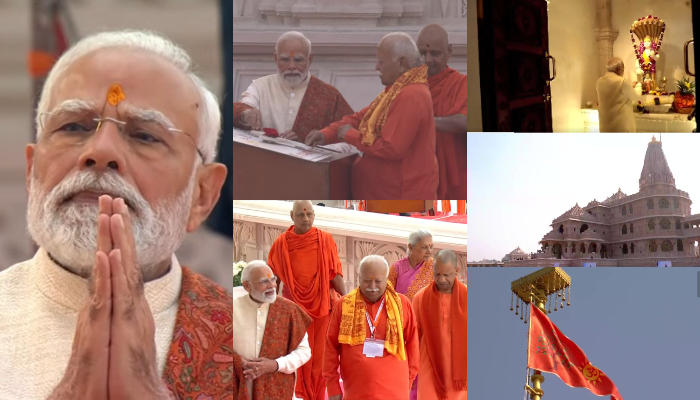
PM Modi and RSS chief Mohan Bhagwat hoisted the saffron ‘Dharma Dhwaj’ atop the shikhara of the Ram Janmabhoomi Temple in Ayodhya on November 25, 2025, marking the formal completion of the temple’s construction. The ceremony was held on the auspicious occasion of Vivah Panchami, coinciding with the Abhijit Muhurat associated with the divine union of Lord Ram and Goddess Sita.
CM Yogi Adityanath Welcomed PM Modi
सप्तपुरियों में श्रेष्ठ श्री अयोध्या धाम में आदरणीय प्रधानमंत्री श्री @narendramodi जी का हार्दिक स्वागत एवं अभिनंदन। pic.twitter.com/768R6ocIBz
— Yogi Adityanath (@myogiadityanath) November 25, 2025
Why the Flag Was Hoisted
The 10 ft by 20 ft saffron flag symbolises the start of a new cultural chapter for the Ram Mandir and represents the spiritual foundation of Ram Rajya. According to temple authorities, saffron stands for fire, sacrifice, purity, and dedication. The flag features three sacred symbols:
- The Sun, representing Lord Ram’s Suryavansh lineage.
- Om, symbolising eternal cosmic energy.
- The Kovidara Tree, believed to be a hybrid of Mandar and Parijat created by Rishi Kashyap.
Champat Rai, General Secretary of the Ram Janmabhoomi Trust, said the Dhwajarohan ceremony signifies the culmination of all construction activities at the temple.
PM Modi’s Rituals, Aarti, and Ceremonies
Before the flag hoisting, PM Modi and Mohan Bhagwat performed aarti inside the Ram Mandir. PM Modi also took part in other rituals and prayers, offering flowers and making traditional offerings before proceeding to the shikhara for the flag-hoisting ceremony. Afterwards, PM Modi visited the Sheshavatar Mandir dedicated to Lord Lakshman.
🛕 Historic day for Ayodhya
Prime Minister Narendra Modi led prayers and rituals at the Ram Mandir 🛕 as the saffron flag was ceremonially raised, marking the temple’s formal completion. The day combined Vedic rites, mass devotion and a symbolic Dhwajarohan that drew thousands… pic.twitter.com/BZ5jzUgccr
— Buzz Alerts (@BuzzAlertsLive) November 25, 2025
He then toured the Saptmandir complex, which houses shrines of Maharshi Vashishtha, Maharshi Vishwamitra, Maharshi Agastya, Maharshi Valmiki, Devi Ahilya, Nishadraj Guha, and Mata Shabari.
Earlier in the day, PM Modi led a grand roadshow from Maharishi Valmiki International Airport to the temple, where thousands of devotees lined the roads, waving saffron flags and showering flowers.
What PM Modi Said in His Address
PM Modi highlighted the importance of learning from Lord Ram’s values and character to guide nation-building, stressing a long-term vision to strengthen India’s foundation for the next 1,000 years. He emphasised breaking free from colonial-era mindsets and appreciating India’s cultural and democratic heritage.
He underlined the unifying power of Ram, promoting devotion, social harmony, and emotional connection over division. The Prime Minister also noted that the Ram Mandir flag symbolises duty, action, and the renaissance of Indian civilisation.
Architectural and Cultural Highlights
The shikhara has been built in the traditional Nagara architectural style, while the surrounding 800-metre parkota incorporates South Indian design elements, reflecting India’s blended temple heritage. The complex also includes 87 carved stone episodes from the Valmiki Ramayana and 79 bronze-cast cultural depictions along the outer walls.