
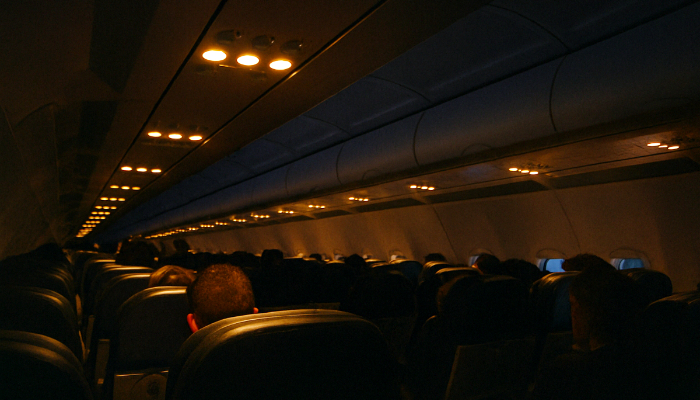
Have you ever noticed that plane lights dim just before takeoff or landing? It’s a small but important part of every flight. While it might seem like a routine change or even part of cabin mood lighting, the real reason is safety. Takeoff and landing are the most critical parts of a flight. Airlines dim the plane’s lights to help passengers’ eyes adjust to the lower light, making it easier for them to react in case of an emergency.
Gets Your Eyes Ready
Dimming the plane lights helps your eyes get used to the darkness. Human eyes take time to adjust, sometimes up to 30 minutes, so this early adaptation ensures better visibility if something unexpected happens. Emergency lights, including exit signs and floor path lighting, stand out more in a dim cabin. This small step can make a big difference in guiding passengers quickly and safely during an emergency.
Keeps You Comfortable and Safe
Besides safety, dimming plane lights reduces disorientation when moving from a bright cabin to darker surroundings outside, such as a runway at night. It also slightly lowers the aircraft’s electrical load during high-energy phases like takeoff and landing. While most flights are smooth, these small safety measures help passengers stay alert, comfortable, and prepared during the most important parts of a flight.
Even if it seems minor, the dimming of plane lights is a smart precaution airlines use to protect passengers. The next time you notice the lights dim, you’ll know it’s not just for effect—it’s a safety-first step to keep everyone on board, ready for anything.