
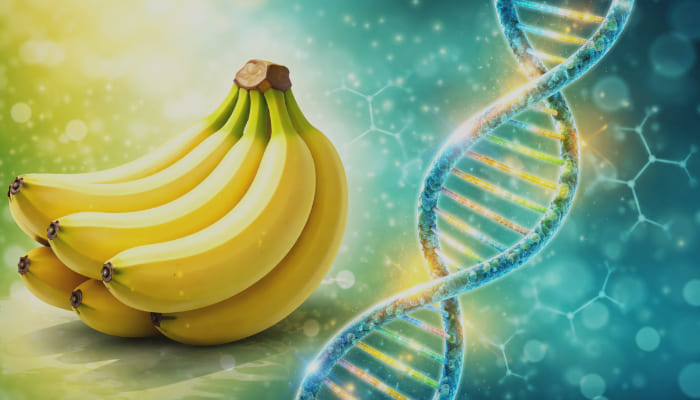
We often hear that humans are closely related to animals like chimpanzees, but what if we told you that a fruit shares a large part of our DNA, too? It sounds strange, but science confirms it. Humans share nearly 60% of their DNA with bananas. This surprising fact has amazed scientists and readers worldwide. It shows how deeply connected all living organisms are, even when they look completely different from each other.
Humans Share DNA With Bananas
The fruit that shares almost 60% of its DNA with humans is the banana—yes, the same yellow fruit found in almost every Indian household. While humans and bananas have no physical similarities, scientists have discovered that many basic genes are common to both. These genes control simple life functions such as cell growth, energy use, and survival, which are shared across plants, animals, and humans.
Why Do Humans and Bananas Share DNA?
DNA is the basic instruction code of life. Over billions of years, certain genes have remained unchanged because they are essential for survival. These ancient genes exist in humans, bananas, and many other living beings. When scientists compare DNA sequences, they find matching genetic patterns. This does not mean bananas can think or feel like humans; it simply shows shared biological roots. This discovery reminds us that life on Earth is closely linked.
Humans not only share DNA with bananas but also with chimpanzees, mice, fruit flies, and even vegetables like cabbage. Nature works in fascinating ways, connecting us to everything around us. So, the next time you eat a banana, remember you are more genetically connected to it than you ever imagined.