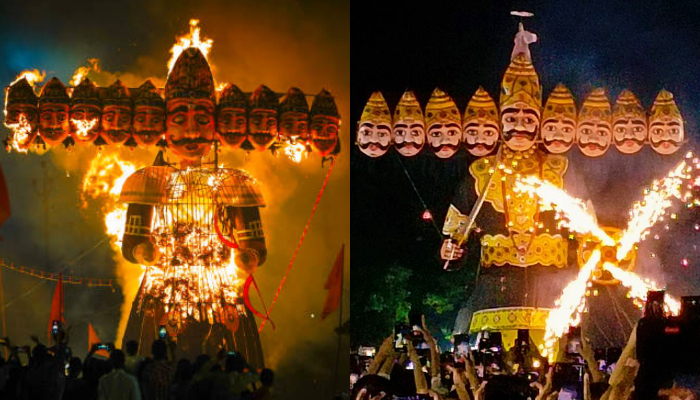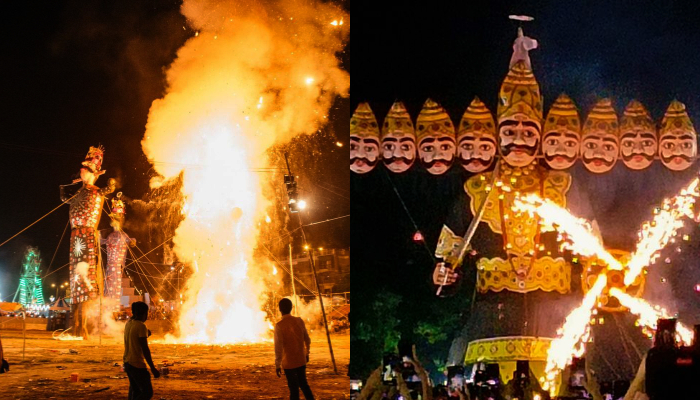

The grand festival is here! Dussehra 2025 will be celebrated worldwide on Thursday, October 2. Also known as Vijaya Dashami, on this day, Lord Ram defeated Lanka’s king Ravana. Hence, it commemorates the triumph of good over evil and pays honour to Lord Ram. Traditionally, Ravana effigies are burned around the country to symbolise the annihilation of evil and ego within oneself. However, despite years of practice, certain districts in India continue to worship Ravana. In these places, he is seen not as evil but as a scholar, warrior, and devotee of Lord Shiva. Many link him with their own history or culture, while others value his wisdom and dedication.
Dussehra 2025: Ravana Worshipped Places
Mandor, Rajasthan
Around 9 kilometres away from Jodhpur, the town of Mandor worships Ravana every day. Locals do not take part in traditional Dussehra celebrations. Ravana is believed to have married Mandodari, the daughter of King Mandawar of Mandor. Because of this, the inhabitants of Mandor regard Ravana as their son-in-law, so destroying his effigy is considered insulting.
Bisrakh, Uttar Pradesh
The village of Bisrakh, near Greater Noida, is popularly thought to be Ravana’s birthplace. Locals revere him as Maha Brahmana (great scholar) and worship him to atone for Brahmahatya (the killing of a Brahmin), regarded as one of the gravest sins in Hinduism. During Navratri, inhabitants undertake Yagnas and rituals to honour Ravana, praying for knowledge and prosperity.
Dashanan Temple, Kanpur, Uttar Pradesh
The Dashanan Temple is a rare Ravana shrine located in Kanpur’s Shivala region. Every year, on the morning of Vijaya Dashami, devotees congregate here and chant “Jai Lankesh” and “Lankapati Naresh ki Jai Ho” in honour of the king of Lanka. The temple only opens once a year, on Dussehra, and draws vast crowds who revere Ravana as a symbol of knowledge and strength.
Gadchiroli, Maharashtra (Gond Tribe)
The Gond tribe of Maharashtra’s Gadchiroli district reveres Ravana and his son Meghanada (Indrajit). According to their tradition, Ravana was a ruler and a devout follower of Lord Shiva. They argue that in Valmiki’s Ramayana, Ravana was not portrayed as entirely evil and never harmed Sita. During their local holiday, Falgun, the Gonds pray to Ravana, honouring his power, devotion, and wisdom.
Kolar, Karnataka
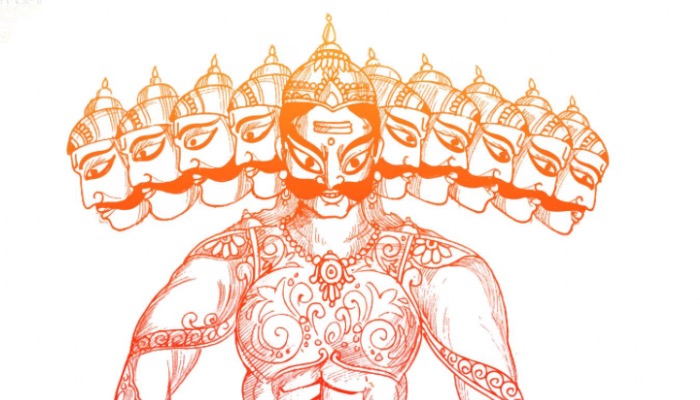
In Karnataka’s Kolar area, worshippers of Lord Shiva also venerate Ravana for his unparalleled devotion. During the local harvest festival, a procession of Ravana’s ten-headed and twenty-armed idol is paraded alongside Lord Shiva’s. He is remembered not as a demon but as a devoted seeker of ultimate knowledge and divine power.