

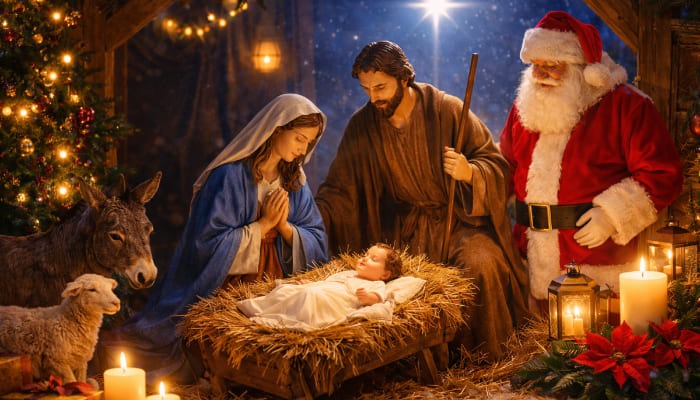
So, have you ever wondered why December 25 is celebrated as Christmas, even though it’s not actually Jesus’ birthday? The Bible doesn’t give a specific date for his birth, and early Christians celebrated it on different days. December 25 was eventually chosen because of symbolism, meaning, and its connection to older winter festivals. Over time, it became the global day of hope, light, and celebration we know today. The first recorded celebration of Christmas on December 25 appears in the year 336, during the reign of Emperor Constantine.
From March 25 to December 25
Some early Christians marked March 25 as the day of the Annunciation, when Mary was told she would have Jesus. Counting nine months from that date brings you to December 25. Others linked March 25 with the creation of the world or Jesus’ death, making it a symbolic day representing a full, meaningful life.
Connected to Winter Festivals
The Date also aligns with older winter celebrations. The winter solstice, Saturnalia in Rome, Yule in Scandinavia, and Yalda Night in Persia all marked the return of longer days. By celebrating Jesus’ birth on this day, early Christians highlighted him as the “light of the world,” turning the darkest time of the year into a festival of hope, renewal, and meaning.