

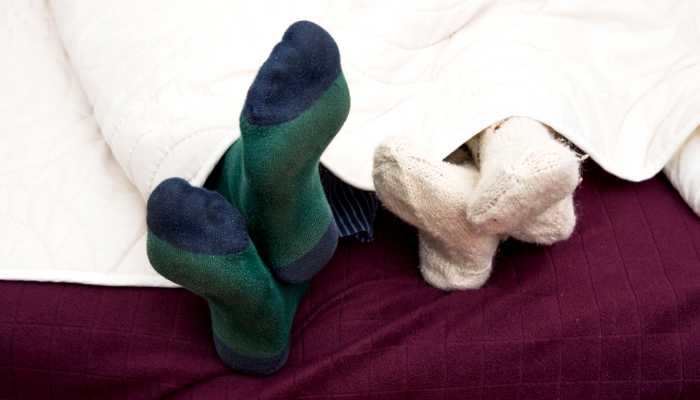
Sleeping in socks or sweaters has become a common winter habit, but many people aren’t sure whether it actually helps or harms sleep. Cold weather often pushes us to layer up at night, yet experts say the real trick is balancing warmth and comfort. While warm feet can improve sleep quality, heavy or tight clothing may do the opposite. Understanding what your body needs can make winter nights far more restful.
Do Socks Actually Improve Sleep?
Cold feet can restrict blood flow, making it harder for your body to settle into sleep. Wearing socks at night provides steady warmth, which helps open up blood vessels and signals your brain that it’s time to rest. Unlike heating pads or hot-water bottles, socks maintain warmth without the risk of burns or overheating. The key is choosing clean, breathable, loose-fitting socks. Stretchable cotton or light wool works best. In colder climates, sleeping in socks or sweaters can shorten the time it takes to fall asleep and improve overall sleep quality.
Sleeping in Socks or Sweaters
Sleeping in socks or a sweater can be comfortable, but only under the right conditions. Thick, tight, or worn-out sweaters trap excess heat and may irritate your skin, causing rashes or restlessness during the night. A clean, soft, breathable sweater is a safer choice. Light woollens or thermals offer warmth without making you sweat. Wearing too many layers can disrupt your natural temperature regulation, so the goal is to stay warm, not overheated. Health experts recommend choosing sleepwear based on weather, room temperature, and personal comfort. On extremely cold nights, a single light sweater is usually enough, while heavy woollens should be avoided in warmer or humid conditions.