
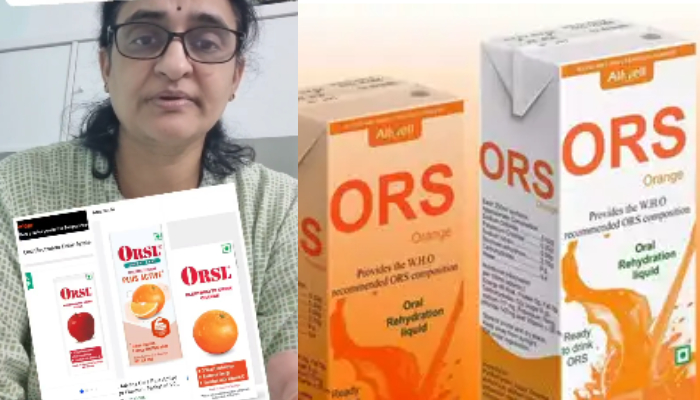
A major controversy erupted after the Delhi High Court stayed the ban on ORS (Oral Rehydration Solution) drinks. Hyderabad-based paediatrician Dr Sivaranjani Santosh called it a “national shame”. In a viral video, the doctor criticised the decision, saying that such actions would attract heavy penalties in the US but are being tolerated in India. She warned that allowing the disposal of such drinks poses a serious risk to child health and public safety.
Sir, @narendramodi and @jpnaddaoffice @fssai @mohfw, it’s a national shame that FSSAI has consented to the request by JNTL(the Indian subsidiary of Kenvue which is a spin off of Johnson and Johnson) for a stay order to dispose of it’s stock of high sugar ORSL!
Sir, not only now,… pic.twitter.com/YTg9KSkePd— Dr.Sivaranjini (@dr_sivaranjani) October 23, 2025
However, the FSSAI later denied these claims, stating that it never permitted the sale or disposal of ORSL stocks. Despite the clarification, outrage continues as doctors warn that such drinks endanger dehydrated children and mislead consumers.
Problems with ORS Drinks
High Sugar Levels
Many so-called “ORS” drinks contain over 120 grams of sugar per litre, far above the WHO-recommended 13.5 grams of dextrose per litre. Such high sugar content can worsen dehydration, raise blood sugar levels, and cause dangerous electrolyte imbalances in children.
Low Electrolyte Content
These drinks often lack adequate 2.6 grams of sodium chloride, 1.5 grams of potassium chloride, and 2.9 grams of sodium citrate per litre, making them ineffective for rehydration. Instead of replenishing lost salts, they simply add sweetness without medical benefit.
Misleading Labels
By branding these beverages as “ORS”, companies mislead consumers into believing they are medical-grade products, when in fact, they resemble soft drinks rather than rehydration solutions.
Risk of Complications in Children
Excess sugar (over 120 grams per litre) and poor electrolyte composition (sodium 2.6 g/L, potassium 1.5 g/L, sodium citrate 2.9 g/L) can lead to severe fluid loss, weakness, and even hospitalisation, particularly in young children suffering from diarrhoea.
In India, 13 out of every 100 child deaths are still caused by diarrhoea, so doctors warn that misleading drinks cannot be allowed. The FSSAI order of 14 October needs to be strictly enforced to ensure that only WHO-approved formulations are sold in pharmacies, hospitals, and schools.