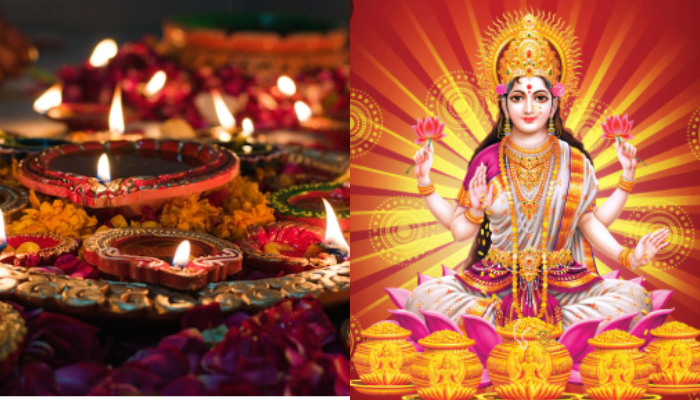

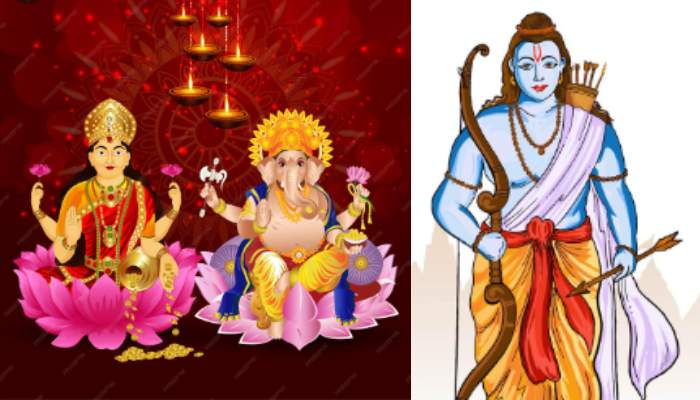
Diwali, the festival of lights, is one of India’s most eagerly awaited celebrations. The festivities kick off with Dhanteras, and the nation is already buzzing with joy and excitement. While the legend of Lord Rama returning to Ayodhya after a 14-year exile is central to Diwali, the evening rituals primarily revolve around Goddess Lakshmi and Lord Ganesha. But why is this so? Let’s find out.
Why Goddess Lakshmi is Worshipped
The story goes back to Hindu mythology and practical beliefs. In the current era of Kaliyuga, where Rajo Guna dominates, people seek wealth and prosperity more than ever. A legend tells of a poor Brahmin who was advised by a priest to worship Goddess Lakshmi to gain financial stability. Diwali falls during the period when Lord Vishnu, Lakshmi’s consort, is said to be in his cosmic sleep from Shayani Ekadashi to Prabodhini Ekadashi.
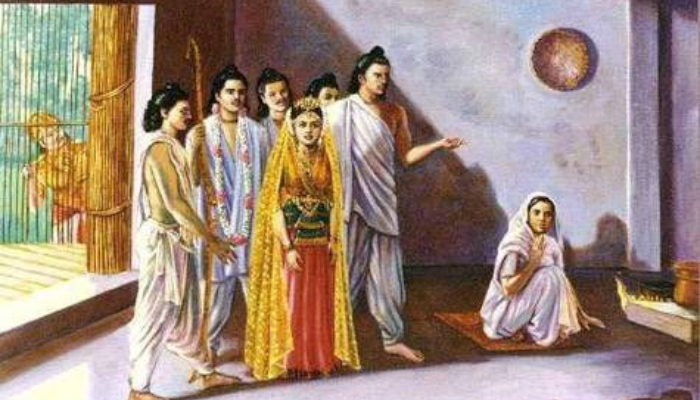
The festival celebrates the victory of good over evil, with Lord Rama returning triumphantly to Ayodhya, Lord Krishna vanquishing Narkasur, and Lord Vamana defeating Bali. Since these victories symbolize prosperity, wealth, and well-being, worshipping Lakshmi on this day is believed to attract abundance.
The Role of Lord Ganesha
Lord Ganesha, the elephant-headed god, accompanies Lakshmi in Diwali prayers for a compelling reason. According to mythology, Lakshmi adopted Ganesha from his mother Parvati.
Out of affection, she declared that all her wealth and prosperity would belong to Ganesha as well. She also decreed that anyone who worships her without honoring Ganesha would never truly attain prosperity.
Symbolic Wisdom Behind Their Worship
Beyond mythology, the symbolic wisdom behind their joint worship is profound. Wealth without intelligence can be fleeting, and material gains are meaningless without righteousness. Ganesha represents wisdom and prudence, ensuring that the prosperity Lakshmi bestows is balanced with ethical judgment and thoughtful use.
Together, they embody a perfect union of wealth and wisdom, explaining why devotees focus on Lakshmi and Ganesha during Diwali rather than Lord Rama, whose return sets the historical and spiritual context for the festival.