
Navratri is not only about fasting, garba nights, and chanting mantras; it is also about embracing a tradition that celebrates innocence as divinity. One of the most powerful rituals of this festival is Kanya Pujan, also known as Kumari Puja, where young girls are worshipped as living embodiments of Goddess Durga herself.
Sacred Belief
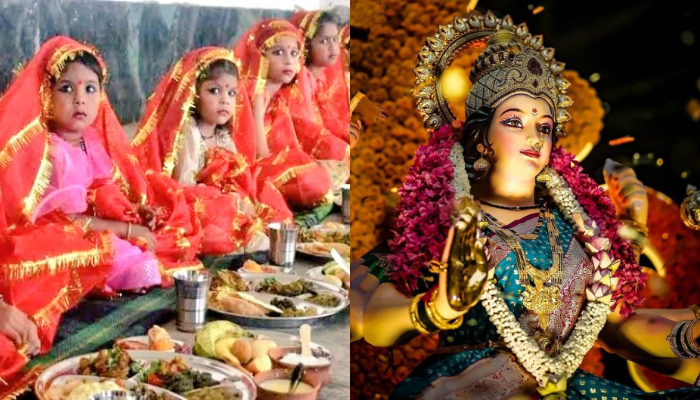
During this ritual, devotees invite little girls to their homes, wash their feet with reverence, and treat them as avatars of Navadurga. The belief is simple yet profound: children are the purest form of humanity, untouched by ego or malice, and worshipping them pleases the Goddess. According to the Devi Bhagwat Purana, those who observe the nine-day fast of Navratri must honour young girls on the final day to complete their devotion.
Blessings Linked to the Number of Girls
Scriptures also highlight the blessings linked to the number of girls worshipped. One girl brings good fortune, two grant perception and salvation, three bring merit, while four and five bless devotees with authority and knowledge. Worshipping all nine girls is believed to bring supreme power and fulfilment.
Mythological Significance
The significance of this ritual goes beyond belief. A story from mythology narrates that Goddess Durga once incarnated as a young girl to defeat the demon Kalasura. This legend reinforces why devotees see girls as universal creative forces.
How Kanya Pujan is Performed
The ritual itself is deeply symbolic. Girls are welcomed with a tilak, rice grains, and vermilion, then offered a traditional meal of puri, chana, and halwa. Gifts, clothes, or money are given before they are respectfully sent off. Each girl is believed to represent a form of the Goddess: Kumarika, Trimurti, Kalyani, Rohini, Kali, Chandika, Shanbhavi, Durga, and Subhadra.
Date and Muhurat for Navratri 2025
For 2025, Kumari Puja falls on Tuesday, 30 September, coinciding with Durgashtami. The Ashtami Tithi begins at 4:31 PM on 29 September and ends at 6:06 PM on 30 September.
This Navratri, remember that Kanya Pujan is not just a ritual; it is a reminder that divinity often resides in the most innocent souls around us.