
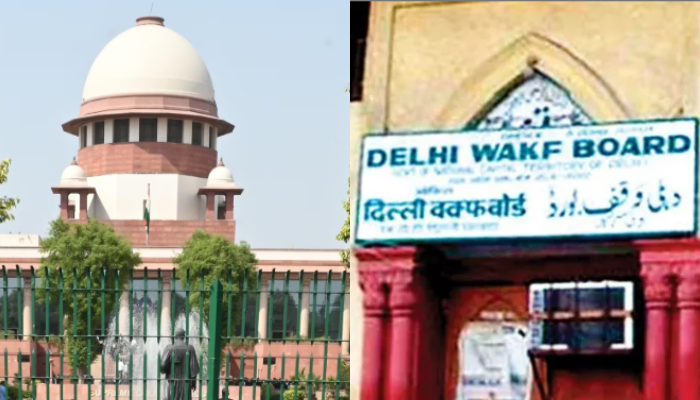
The Supreme Court on Monday put a partial stay on the Waqf Act, suspending three important clauses while keeping the rest of the law in effect. The court said that laws passed by Parliament are usually considered constitutional, but some sections of the Waqf Act needed temporary protection. The stay affects rules on who can create a waqf, the representation of non-Muslims in Waqf boards, and the management of disputed Waqf land. The court also suggested that the CEO of a Waqf Board should preferably be a Muslim.
#WATCH | Delhi: On the Supreme Court’s order in the Waqf Amendment Act, Advocate Varun Sinha says, “There is no stay on the amendments brought in by the central government. Only there is an interim order in favour of the petitioners regarding that they cannot be deprived of the… pic.twitter.com/8hRnXWfyI5
— ANI (@ANI) September 15, 2025
SC Suspends Three Clauses of Waqf Act
Five-Year Practice Rule
The Supreme Court stayed the clause that required a person to have practised Islam for at least five years before creating a waqf. The judges noted that, without clear guidelines from state governments, this rule could lead to uncertainty or unfairness in determining eligibility.
Non-Muslim Representation in Waqf Boards
The Supreme Court has set limits on the number of non-Muslims in Waqf bodies. Non-Muslims can now hold up to four seats in the Central Waqf Council, with similar restrictions for State Waqf Boards. The court allowed non-Muslims to continue serving as CEOs, but recommended that Muslims should be appointed wherever possible to ensure proper representation under the Waqf Act.
Management of Disputed Waqf Land
The court has stayed the government’s power to cancel Waqf land while ownership disputes are ongoing. Until a tribunal or court decides the matter, the Waqf property will remain protected. During this period, Waqf Boards cannot create rights for third parties, and government reports alone cannot change ownership, helping safeguard the Waqf assets under the Waqf Act.
The Supreme Court’s partial stay provides important safeguards while upholding the provisions of the Waqf Act. By protecting disputed properties, clarifying the eligibility criteria, and ensuring proper community representation, the ruling maintains a balance between constitutional principles and administrative powers. These measures are aimed at preventing misuse and preserving the integrity of Waqf assets across the country.