

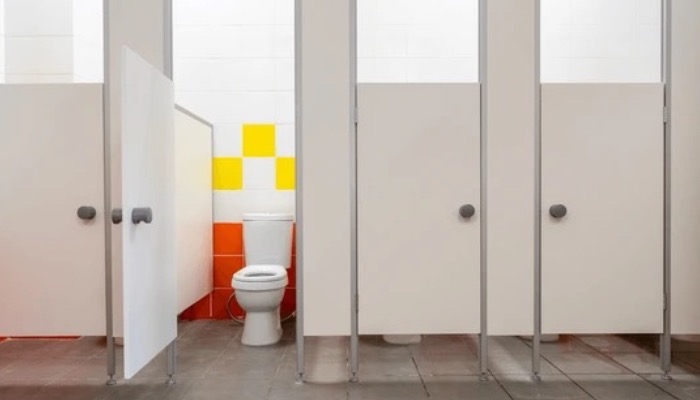
Ever wondered why there’s a gap in public restrooms in malls, theatres, or airports? You’ve probably noticed these odd or even invasive toilet door designs, but what are they exactly for? This design choice is quite deliberate, and it’s even more practical than you might think. One of the most important reasons for this is emergency access. If someone faints, becomes unwell, or gets locked inside, a staff member or helper can see in or crawl inside for help and quick assistance. It’s a basic but quite an important safety feature.
Another important perspective is cleaning efficiency. Open-bottom doors allow janitorial staff to clean multiple stalls quickly and effectively. This improves hygiene while reducing labour time. From a cost-effectiveness standpoint, these doors are cheaper to manufacture and maintain. They’re also less prone to damage than full-length doors, especially in high-traffic public areas.
There’s also a subtle psychological advantage — the lack of full privacy discourages loitering or inappropriate activity, increasing turnover and security in shared restrooms. While some may view the open-bottom design as a privacy concern, its benefits in terms of safety, hygiene, and practicality have made it a global standard.