

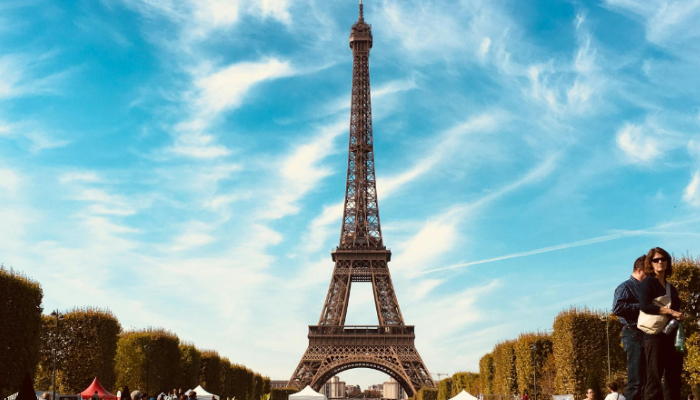
Every summer, a popular fact resurfaces online: the Eiffel Tower grows taller in hot weather, some claim by as much as six inches. The idea spreads widely across social media, drawing millions of views. Some claim that the Iron Lady stretches toward the sun, but does the tower rise with the heat? The claim has a scientific basis, though the actual change is smaller than most people think.
Eiffel Tower: A Landmark That Moves with the Weather
The Eiffel Tower isn’t just a static monument; it’s a remarkable example of 19th-century engineering. Built in 1889 by Gustave Eiffel for the World’s Fair, the structure is made of puddled iron, a material that expands when heated and contracts when cooled. This natural response, called thermal expansion, means the tower slightly ‘moves’ with seasonal temperature changes. It’s no exaggeration to say it ‘moves’ with the seasons.
On hot summer days, it increases in height by 4 to 6 millimeters, about the thickness of a coin. In winter, the metal cools and contracts, and the tower returns to its original height. These changes are small but measurable, and engineers monitor them regularly. Engineers have studied and monitored this behavior for decades. The materials used and the tower’s open-lattice design make it incredibly resilient to environmental shifts.
Where Did the Six-Inch Story Come From?
The popular six-inch claim likely comes from a misunderstood fact. According to the tower’s official website, sunlight doesn’t hit all sides evenly. One side may heat more, causing it to expand faster. This imbalance makes the top lean slightly, resulting in a curved sway of up to 15 centimeters, around six inches, but sideways, not upward.
This movement is normal and completely safe. The structure was designed to withstand minor shifts caused by weather, including heat and wind.